13. April 2026
Why is Composite Decking a Better Long-term Investment?
Why Composite Marine Deck Panels Are Better Than Wood (And Why the Typhoon Series Stands Out)
When it comes to building or upgrading a dock, one of the most important decisions is choosing the right decking material. For decades, wood has been the default choice—but modern waterfront construction is rapidly shifting toward composite marine decking panels.
If you're still considering traditional lumber, it’s worth understanding why composite systems—especially the Typhoon Series premium composite decking panels from Snap Deck—are quickly becoming the industry standard.
The Problem with Wood Dock Decking
Wood may seem like a cost-effective and familiar option, but it comes with long-term drawbacks that can quickly outweigh the initial savings.
1. Constant Maintenance
Wood docks require:
- Regular sealing and staining
- Frequent repairs and board replacement
- Ongoing protection from moisture and UV damage
Without consistent upkeep, wood deteriorates quickly in marine environments.
2. Rot, Warping, and Splintering
Exposure to water leads to:
- Rot and mold growth
- Warping and cracking
- Dangerous splinters
These issues not only shorten the lifespan of your dock but also create safety hazards.
3. Poor Performance in Harsh Conditions
Storms, heavy foot traffic, and fluctuating temperatures can weaken wood structures over time—making them unreliable for long-term use.
Why Composite Marine Deck Panels Are the Better Choice
Composite dock decking panels are engineered specifically for waterfront environments, offering durability, safety, and minimal maintenance.
✅ Low Maintenance
Unlike wood, composite panels require little more than occasional cleaning—no sanding, staining, or sealing needed.
✅ Superior Durability
Composite materials resist:
- Water damage
- UV exposure
- Cracking and warping
This makes them ideal for both residential docks and high-traffic commercial marinas.
✅ Slip Resistance & Safety
Modern composite panels feature textured surfaces that provide better traction, even when wet—reducing the risk of slips and falls.
✅ Longer Lifespan
Composite decking significantly outlasts wood, making it a smarter long-term investment.
Why the Typhoon Series from Snap Deck Is a Game-Changer
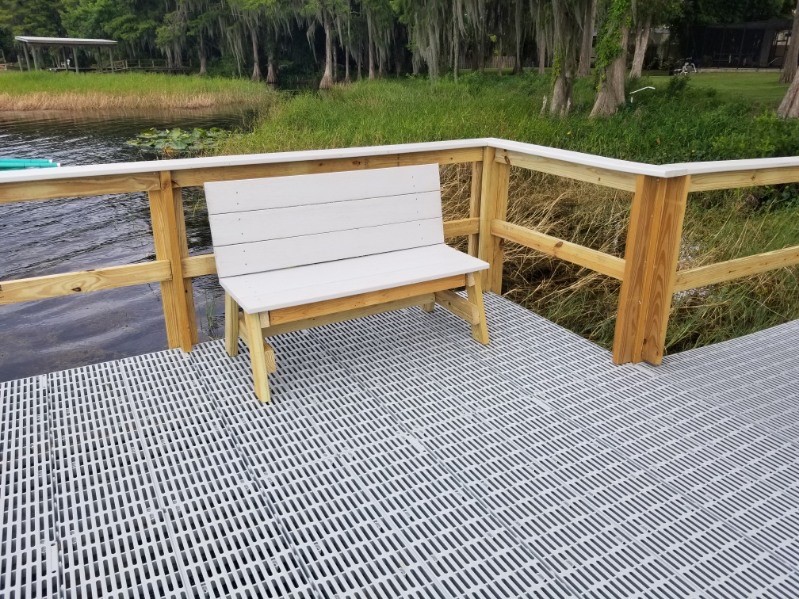
Not all composite decking is created equal. The Typhoon Series premium composite decking panels from Snap Deck take performance to the next level with innovative engineering and marine-specific design.
🌊 1. Flow-Through Design (40% Light Penetration)
Unlike solid wood boards, Typhoon panels allow up to 40% light to pass through, helping:
- Protect aquatic ecosystems
- Reduce algae buildup
- Improve water flow beneath the dock
🦶 2. Built-In Non-Slip Surface
Each panel features an integrated textured surface that enhances grip and comfort—even for barefoot use.
🏗️ 3. Rigid, High-Strength Construction
The Typhoon Series delivers the strength of reinforced systems while remaining lightweight and easy to install.
⚡ 4. Maintenance-Free Performance
No sealing, staining, or repairs required—just simple cleaning with soap and water.
☀️ 5. UV & Weather Resistance
With built-in UV inhibitors, these panels resist fading and maintain their appearance over time—even in intense sun exposure.
🌪️ 6. Storm Surge Resistant Design
The slotted, flow-through structure allows water to pass through, reducing uplift and minimizing storm damage.
♿ 7. ADA-Compliant Accessibility
Typhoon panels are designed to meet ADA standards, making them ideal for public docks, marinas, and commercial applications.
🔧 8. Fast & Easy Installation
Panels are designed for quick installation—simply lay them into place and secure them, reducing labor time and costs.
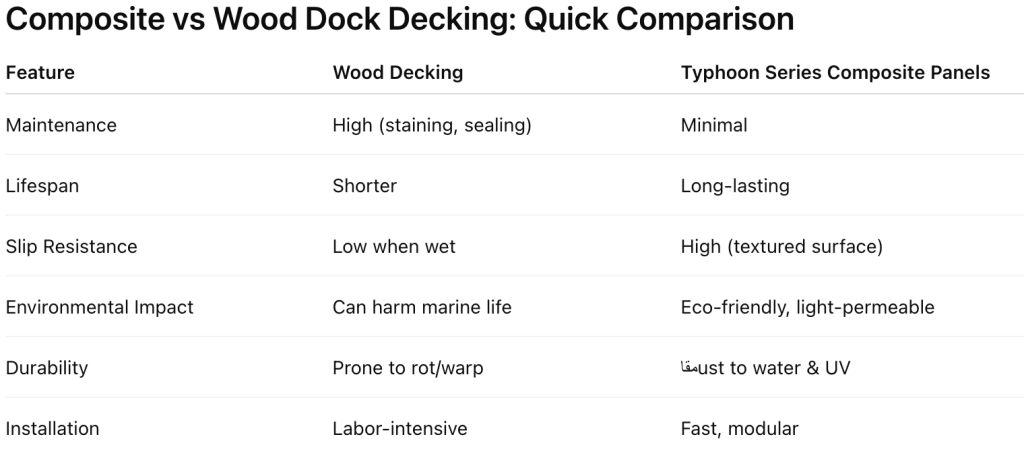
Composite vs Wood Dock Decking: Quick Comparison
The Bottom Line
While wood may seem like the traditional choice, it simply can’t compete with the performance, safety, and longevity of modern composite materials.
The Typhoon Series from Snap Deck stands out as a premium solution—combining:
- Flow-through eco-friendly design
- Exceptional durability
- Slip-resistant safety
- Virtually zero maintenance
For homeowners, contractors, and marina operators alike, upgrading to composite marine decking isn’t just a trend—it’s a smarter investment in long-term performance.