
13. April 2026
Snap Deck Composite Decking Panels or ?
Snap Deck vs ThruFlow: Why Wider, Thicker Composite Panels Deliver a Better Dock
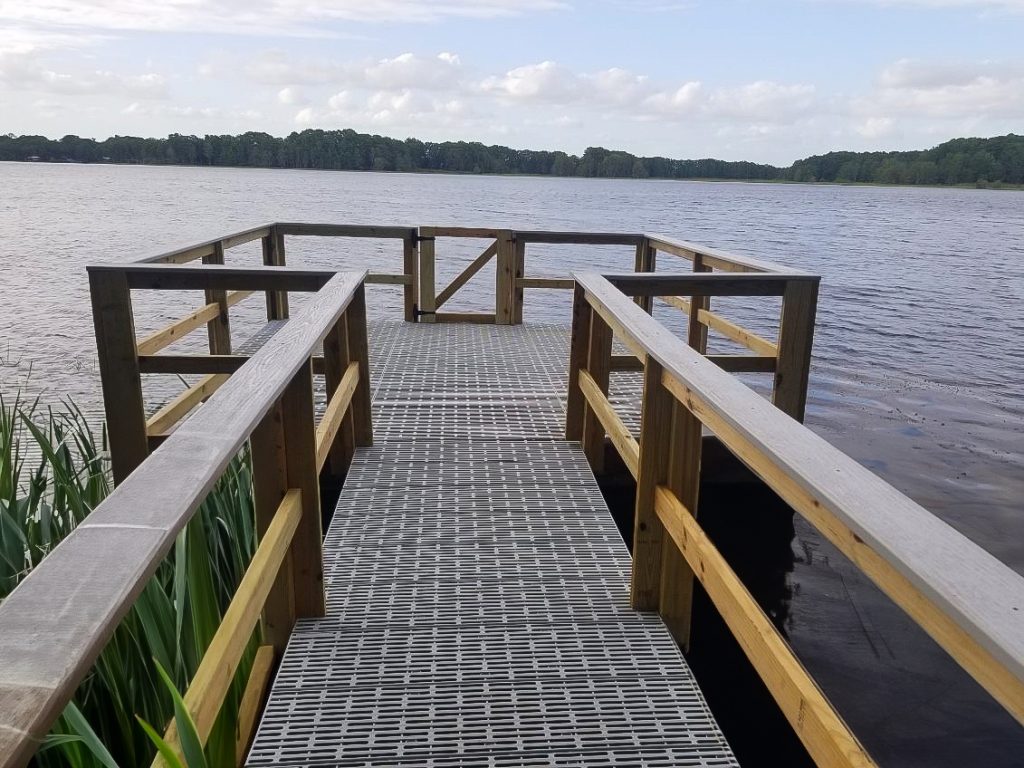
When comparing modern dock decking systems, two names consistently come up: Snap Deck composite panels (Typhoon Series) and ThruFlow decking panels.
Both outperform traditional wood—but when you look closely at panel size, thickness, and installation flexibility, the differences become clear.
If you’re building a dock that needs to last, feel solid, and install efficiently, those differences matter.
The Core Difference: Design Philosophy
At a high level:
- ThruFlow focuses on open-grid, lightweight polypropylene panels
- Snap Deck Typhoon Series focuses on rigid, structural composite panels with real-world usability
👉 That difference shows up in panel width, thickness, and framing options—which directly impact performance.
📏 1. Panel Width: Snap Deck’s 2’ Wide Advantage
One of the biggest advantages of Snap Deck is its true 2-foot-wide panel design.
Snap Deck Typhoon Series:
- Available in 2’ wide panels (2’ x 3’, 2’ x 4’, 2’ x 5’) and comes in 2 colors: Gray and Sandstone
- Covers more surface area per panel
- Reduces installation time, reduces framing, reduces fasteners and fewer seams
ThruFlow Panels:
- Commonly offered in narrower formats (1’ widths common)
- Requires more panels and more fastening points and more framing requirements
👉 Why this matters:
- Fewer seams = cleaner appearance
- Fewer fasteners = faster installs
- Wider panels = more structural consistency
✅ Winner: Snap Deck
🧱 2. Thickness & Structural Strength: Snap Deck Is Built Heavier
Thickness directly affects how a dock feels underfoot.
Snap Deck Typhoon Series:
- 1.4” thick panels
Engineered to deliver rigidity similar to reinforced systems
ThruFlow (Legacy XP example):
- ~1.2” thick panels
- Relies on ribbing and reinforcement for strength
👉 Real-world difference:
- Snap Deck = more solid, less flex
- ThruFlow = lighter, but can feel more like grating
✅ Winner: Snap Deck (more rigid, premium feel)
🔩 3. Framing Flexibility: Snap Deck Offers More Installation Options
This is where Snap Deck really separates itself.
Snap Deck Typhoon Series:
- Supports multiple joist spacing options (16”, 18”, 20”, 24” depending on panel size)
- Designed to work across varied framing layouts, Great for dock renovations
- Simple “lay and screw” installation, Panels are easily modified / cut with normal hand-tools
ThruFlow Panels:
- Requires specific framing spacing based on panel size
Uses interlocking tab systems + spacing/gapping requirements
👉 Why this matters:
- Snap Deck = more adaptable to real-world builds
- ThruFlow = more restrictive, especially on retrofits
✅ Winner: Snap Deck (more flexible + contractor-friendly)
⚙️ 4. Installation Efficiency: Faster, Cleaner Builds
Snap Deck:
- Larger panels = fewer pieces to install
- Less complex interlocking system
- Minimal visible fasteners, they are hidden in pockets below the surface
ThruFlow:
- Multiple interlocking tabs require alignment
- Must allow for thermal expansion gaps
- More pieces = more labor
👉 Result:
- Snap Deck reduces install time and complexity
- ThruFlow requires more precision and planning
✅ Winner: Snap Deck
🌊 5. Performance: Both Handle Water—But Differ in Usability
ThruFlow:
- Up to 43–50% open surface area for maximum water / light flow
- Excellent for storm surge and environmental flow
Snap Deck:
- 40%+ light penetration with a more usable surface
- Maintains drainage while improving walkability
👉 Key difference:
- ThruFlow = essentially the same openness as Snap Deck, but the panels are not as thick as Snap Deck Panels
- Snap Deck = balance of flow + usability
✅ Winner: Snap Deck (better overall usability)
🦶 6. Comfort & Real-World Use
Snap Deck:
- Solid walking surface that is ADA compliant
- Barefoot-friendly - Does not get hot
- Less chance of dropping items through panels
ThruFlow:
- Open grid design
- Less comfortable for barefoot traffic
- Items can fall through gaps
👉 This is especially important for:
- Residential docks
- Marinas with foot traffic
- Families and guests
✅ Winner: Snap Deck
⚖️ Final Comparison
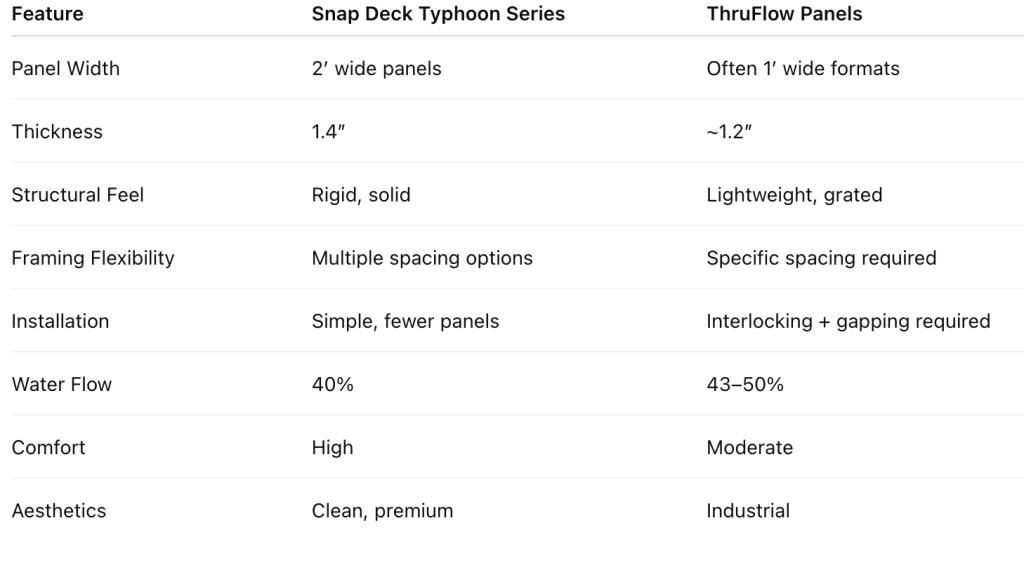
🏆 Final Verdict: Why Snap Deck Is the Better Choice
Both systems outperform wood—but they are built for different priorities.
ThruFlow excels in:
- Lightweight, eco-focused design
Snap Deck Typhoon Series excels in:
- Wider 2’ panels (faster installs)
- Thicker, more rigid construction
- More flexible framing compatibility
- Better comfort and everyday usability
👉 If you want a dock that feels solid, installs faster, and looks premium—Snap Deck is the clear winner.
Bottom Line
Dock decking has evolved far beyond wood—but not all composite systems are equal.
If your goal is:
- Fewer seams
- Stronger, thicker panels
- Easier installation
- Better long-term usability
👉 The Snap Deck Typhoon Series delivers a superior solution compared to grated systems like ThruFlow.